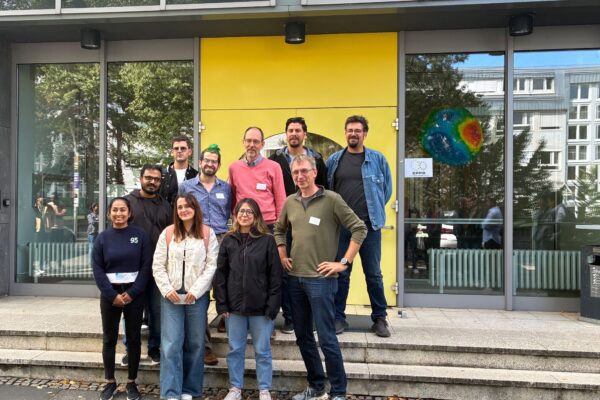
The European Plant Phenotyping Symposium (EPPS) Training School, supported by the German Plant Phenotyping Network (DPPN) and the PHENOWEX project, brought together researchers, students, and industry professionals for a week of immersive learning, hands-on exercises, and collaborative exploration of cutting-edge plant sensing technologies.
Day 1: Online Preparatory Workshop – Understanding the Fundamentals
Date: Friday, 05 September
Mode: Online
The First day introduced participants to the biological and technical foundations of plant phenotyping.
Experts from leading European institutes presented topics on:
- Chlorophyll fluorescence and its role in photosynthetic efficiency measurement.
- Hyperspectral and multispectral imaging beyond the visible range.
- 3D reconstruction using binocular images for canopy analysis.
- Deep learning and semantic segmentation methods applied to plant imaging.
This session was foundation for in-person sessions.
Speakers included: Andreas Hund (ETH Zurich), Roland Pieruschka (FZJ), Achim Walter (ETH Zurich), David Rousseau (U. Angers), Onno Muller (FZJ), Zijian Wang (U. Queensland), Raul Lopez-Lozano (INRAe), Benoit de Solan (Arvalis), and Gerit Polder (WUR).
Day 2: Hands-On Data Processing
Date: Friday, 12 September
Location: Institute of Geodesy and Geoinformation, University of Bonn
Participants worked in Python to apply data-processing workflows for complex plant canopy datasets.
Key activities included:
- Semantic segmentation of wheat organs using the Global Wheat Model.
- 3D reconstruction from binocular imaging data.
- Radiometric calibration, focusing on reflectance estimation and correction stability during drone flights.
- Feature extraction from hyperspectral imagery to link spectral data with plant physiology.
The focus was on integrating AI-driven image analysis with practical data processing in plant phenotyping.
Day 3: Excursion – Exploring the Bio-Based Economy
Date: Saturday, 13 September
Lead: Prof. Uli Schurr (FZJ)
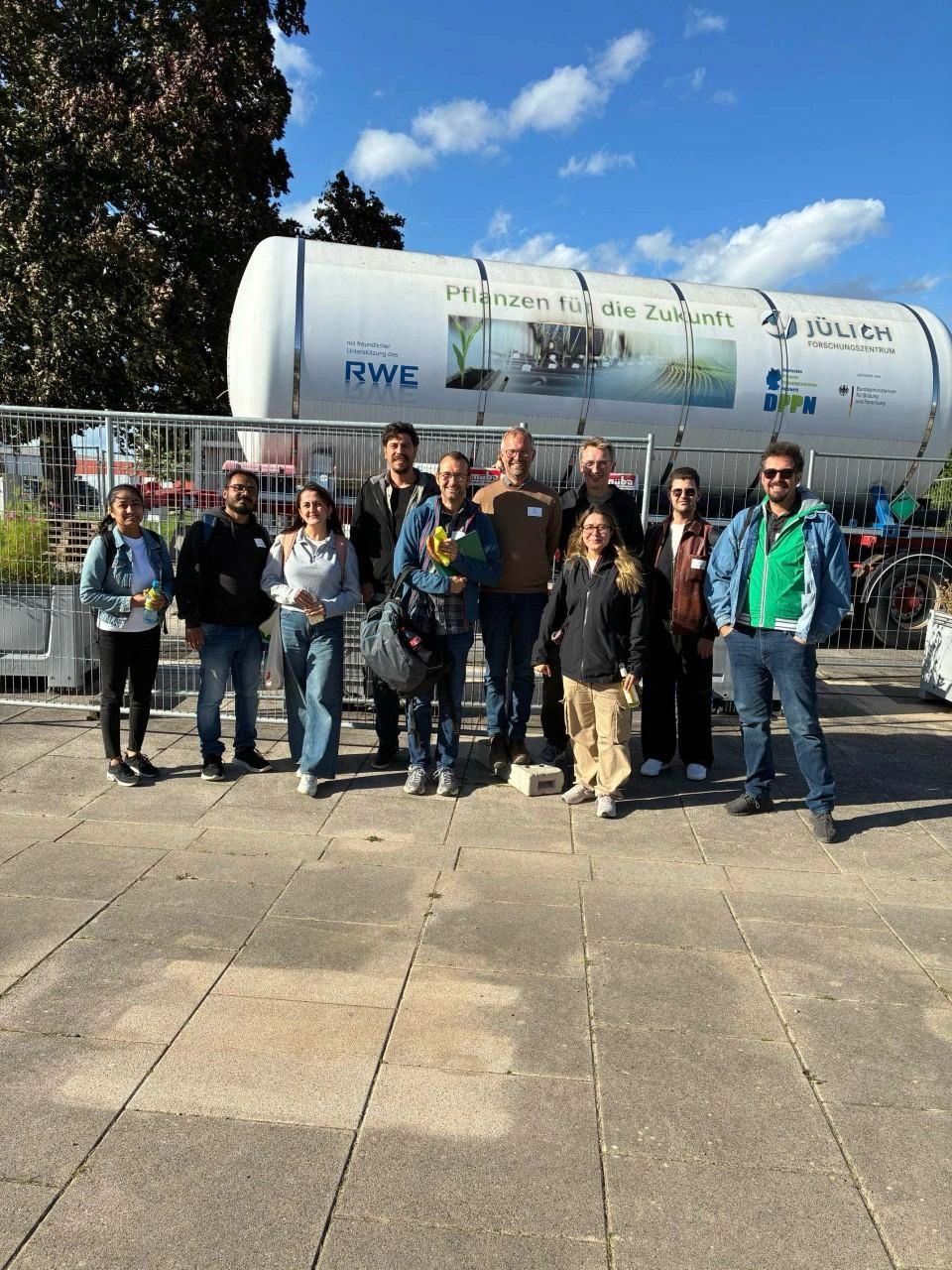
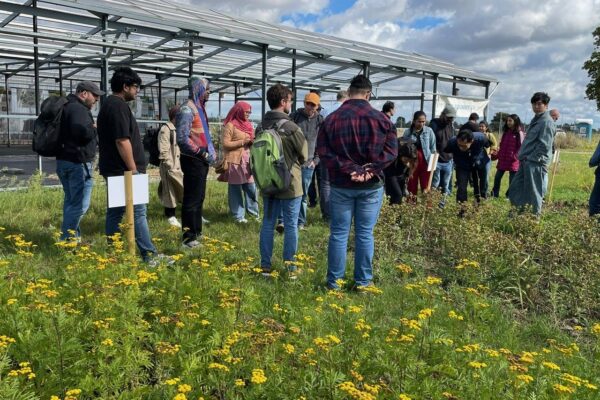
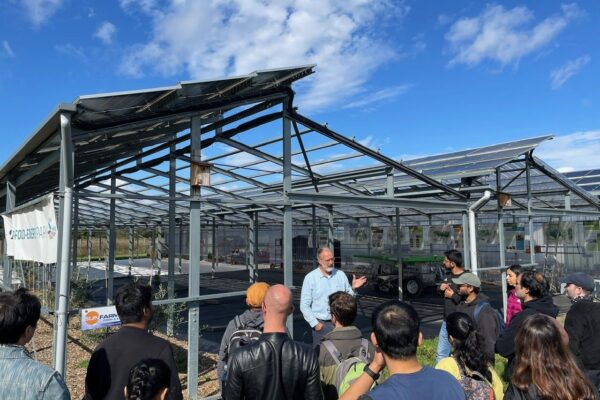
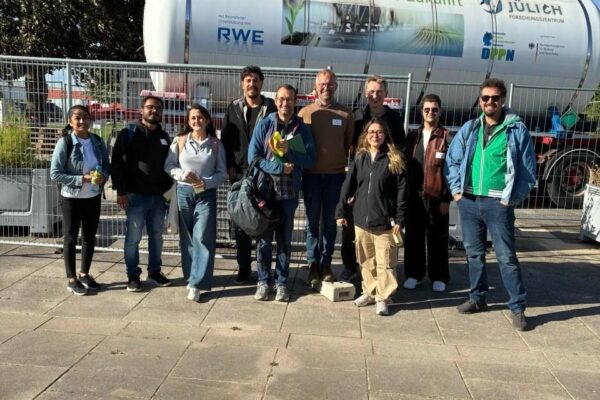
Participants explored regional transformation sites in the Rhenish Mining Region, witnessing how research connects with real-world bioeconomy initiatives.
Highlights included:
- Terra Nova Brown Coal Mining Site – Transitioning towards sustainable land reuse.
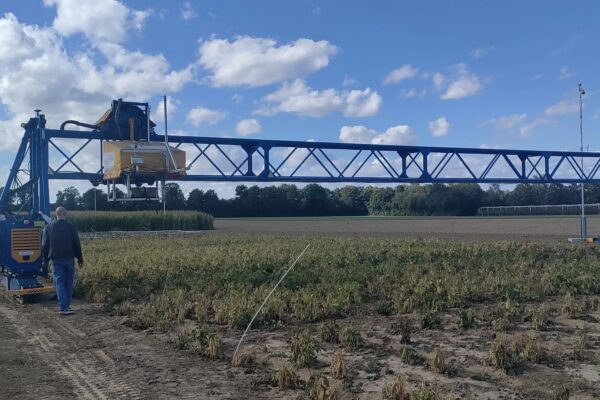
- AgriPV Experimental Site – Integrating agriculture and photovoltaics for dual land use.
- Agri-Food-Energy Park, Bürgewald – Demonstrating circular resource management.
- Zerkall Paper Factory – Showcasing circular economy principles in traditional industries.
The excursion emphasized the link between plant phenotyping, sustainability, and bio-based innovation.
Day 4: Device Demonstrations and Industry Collaboration
Date: Monday, 15 September
Location: Campus Klein-Altendorf, Rheinbach
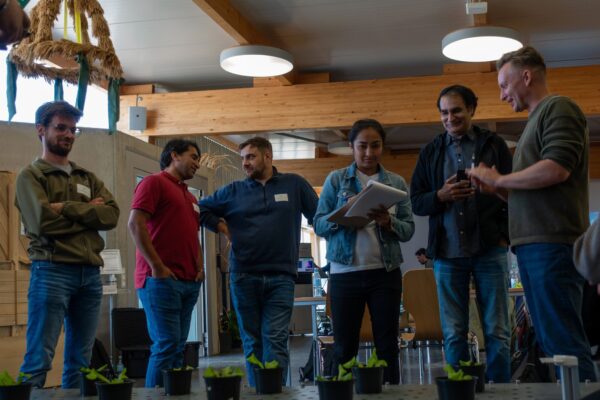
The final day focused on hands-on technology demonstrations with leading phenotyping companies:
- PHENOSPEX
- PhenoVation
- Hiphen
- LIFT/FLOX
Participants rotated between technical stations, engaging in real-time data acquisition, fluorescence detection, 3D canopy analysis, and multispectral imaging.
The day concluded with a group discussion summarizing lessons learned and potential collaborations.